
Building a Balanced Thali: A Practical Nutrition Framework
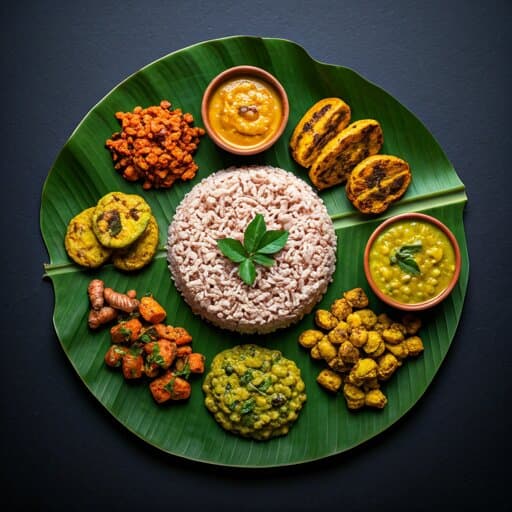
Building a genuinely balanced everyday meal doesn't require calorie counting or complicated tracking — a simple visual framework, applied to a familiar Kerala thali, gets most of the way there.
The Basic Framework
A reasonably balanced thali can be thought of in rough visual proportions: roughly a quarter of the plate as a carbohydrate staple (rice or an alternative like millet), a quarter as a protein source (fish, legumes, or dairy), and the remaining half as vegetables in some combination — curries, thoran, and salad-style preparations.
Why Traditional Kerala Meals Often Already Fit This Pattern
A well-composed traditional meal — rice, a fish or dal-based curry, and one or two vegetable thoran or mezhukkupuratti preparations — genuinely aligns reasonably well with this general framework, even without deliberate planning, which reflects the accumulated practical wisdom in traditional meal structuring.
Where Everyday Meals Sometimes Drift
The more common everyday drift is toward a larger rice portion and a smaller vegetable and protein portion, particularly with quick, simplified everyday cooking compared to a more elaborate traditional full meal — worth noticing and adjusting where practical, rather than a fixed rule to obsess over.
A Practical, Non-Rigid Application
This framework works best as a general mental reference — most meals most of the time — rather than a strict requirement for every single meal, which allows room for festival meals, quick simplified dinners, and genuine flexibility.
Frequently Asked Questions
Does this framework apply to non-vegetarian and vegetarian thalis equally?
Yes — the protein quarter can come from fish, egg, dairy, or legumes depending on dietary preference; the general proportional framework applies either way.
Is it necessary to measure portions precisely?
No — this is meant as a rough visual guide, not a precise measurement system; general proportion awareness is the useful part, not exact measurement.
How does this framework apply to festival meals like sadhya?
Festival meals are reasonably treated as occasional exceptions rather than needing to fit the everyday framework, given their celebratory, less frequent nature.
Related Reading
Medical Disclaimer: This article is for general educational purposes and is not medical advice. Consult a qualified healthcare professional before making changes to your diet, supplement routine, or lifestyle.
More in the Library

Sugar in Disguise: Hidden Sugars in 'Healthy' Kerala Snacks
Several snacks marketed or perceived as healthy in Kerala actually carry meaningful hidden sugar content. Here's what to watch for…

Micronutrient Gaps Common in South Indian Diets
Even a generally healthy South Indian diet can have specific, common micronutrient gaps. Here's what research points to, and pract…

Omega-3s Without Fish: Plant-Based Sources for Kerala Vegetarians
Vegetarian Malayalis often miss out on fish-based omega-3s. Here are the genuinely useful plant-based sources available, and their…