
Understanding Glycemic Index With Kerala Staple Foods

Glycemic index (GI) is a useful nutritional concept that's often explained using foods rarely eaten in Kerala. Understanding it through actual local staples makes it considerably more practically useful.
What Glycemic Index Actually Measures
GI ranks how quickly a carbohydrate-containing food raises blood sugar after eating, on a scale generally categorised as low, medium, or high. It's a genuinely useful concept, particularly for people managing diabetes or prediabetes, though it's only one factor among several relevant to overall diet quality.
Where Kerala Staples Fall
White rice, a dietary staple across Kerala, generally falls into the higher end of the GI range, particularly when highly polished. Traditional unpolished or parboiled rice varieties tend to have a somewhat lower GI due to higher fibre retention. Tapioca (kappa), another Kerala staple, is also relatively high-GI when boiled plain.
Practical Ways to Moderate GI Impact
Pairing higher-GI staples like rice with fibre-rich vegetables, protein (fish, legumes), and healthy fats — essentially, the structure of a traditional Kerala meal with sambar, thoran, and fish — genuinely helps moderate the overall meal's blood sugar impact, compared to eating the same rice in isolation. This is a case where traditional meal structure aligns well with modern GI-management principles, even without deliberately planning it that way.
A Balanced Takeaway
GI is a useful lens, not a reason to eliminate rice or tapioca from a Kerala diet entirely. Meal composition, portion, and pairing matter as much as the GI ranking of any single ingredient.
Frequently Asked Questions
Should people with diabetes avoid rice completely?
Not necessarily — portion control, pairing with fibre and protein, and considering variety (parboiled vs. polished) are all reasonable moderation strategies; a doctor or dietitian should guide specific dietary planning for diagnosed diabetes.
Is brown rice significantly lower GI than white rice?
Generally yes, due to higher fibre content, though the difference varies by specific variety and preparation method.
Does cooking method affect a food's glycemic index?
Yes — for example, cooling and reheating rice can modestly lower its glycemic impact due to changes in starch structure, a genuinely documented (if modest) effect.
Related Reading
- Building a Balanced Thali: A Practical Nutrition Framework
- Fermented Foods in Traditional Kerala Cooking
Medical Disclaimer: This article is for general educational purposes and is not medical advice. Consult a qualified healthcare professional before making changes to your diet, supplement routine, or lifestyle.
More in the Library
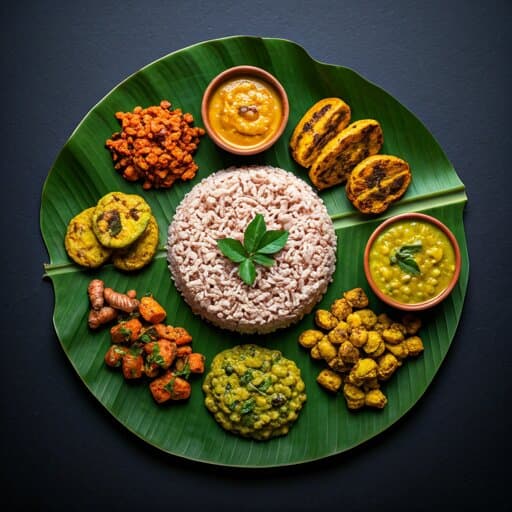
Building a Balanced Thali: A Practical Nutrition Framework
A practical, visual framework for building a nutritionally balanced everyday Kerala thali, without needing to count calories or ma…

Sugar in Disguise: Hidden Sugars in 'Healthy' Kerala Snacks
Several snacks marketed or perceived as healthy in Kerala actually carry meaningful hidden sugar content. Here's what to watch for…

Micronutrient Gaps Common in South Indian Diets
Even a generally healthy South Indian diet can have specific, common micronutrient gaps. Here's what research points to, and pract…