The Science of Whole-Food Nutrition vs. Isolated Supplements

Why nature's complex biological structures may offer advantages over synthetic isolates — and what the "entourage effect" actually means for bioavailability.
The Bioavailability Question
In the race for health, the supplement industry often pushes for higher concentrations of isolated active compounds — a single vitamin at 500% the daily value, or an isolated "active ingredient" extracted from its natural context. But nutritional science suggests a more nuanced picture: how well a compound is absorbed and used by the body isn't just about how concentrated it is, it's also about the context it's consumed in.
Isolated vitamins or polysaccharides often lack the co-factors — enzymes, minerals, and secondary plant compounds — that occur naturally alongside them in whole foods. Some research suggests these co-factors can play a meaningful role in how effectively the body absorbs and uses the primary compound, an idea often referred to as the "entourage effect," a term originally used in cannabis research but increasingly applied more broadly in nutrition science.
What This Means for Medicinal Mushrooms
When you consume a whole-extract preparation of a medicinal mushroom like Ganoderma, rather than an isolated single compound, you're getting a broader matrix of naturally co-occurring substances:
- Triterpenoids — compounds associated with Ganoderma's traditional adaptogenic use
- Polysaccharides (beta-glucans) — associated with immune-modulating properties
- Bioactive proteins — which may play a supporting role in how other compounds are processed by the body
This is part of why quality Ganoderma products are often marketed as "dual-extract" (using both water and alcohol extraction) rather than isolating a single named compound — the goal is capturing a fuller natural profile rather than one ingredient in isolation.
Whole Food vs. Isolated Supplement: A Practical Comparison
| Whole-food / whole-extract | Isolated single compound | |
|---|---|---|
| Compound range | Broad, naturally co-occurring | Narrow, single target compound |
| Dosing precision | Less exact | Highly precise |
| Natural co-factors | Present | Generally absent |
| Best suited for | General wellness support | Addressing a specific, diagnosed deficiency |
Neither approach is universally "better" — isolated supplements have real, well-established value for treating specific diagnosed deficiencies (like iron-deficiency anaemia, where a precise, high dose is often clinically necessary), while whole-food and whole-extract approaches are generally better suited to broad, ongoing wellness support rather than correcting an acute deficiency.
Practical Takeaways
- For general wellness support, whole-food sources and whole-extract preparations are a reasonable default choice
- For a diagnosed deficiency (confirmed by blood testing), a targeted isolated supplement — under medical guidance — is often more appropriate and effective
- Wherever you're located in India, the same whole-food-vs-isolate principles apply when comparing products — this isn't a Kerala-specific consideration
- When choosing a Ganoderma or Spirulina product, look for whole-extract or dual-extract processing rather than a single isolated compound, if general wellness support is your goal
Frequently Asked Questions
Are isolated vitamin supplements bad for you?
No — isolated supplements are appropriate and often necessary for treating specific, diagnosed deficiencies. The "whole food is always better" framing is an oversimplification; the right choice depends on your specific situation and, ideally, guidance from a healthcare provider.
Does "dual-extraction" actually make a measurable difference?
Dual-extraction (using both water and alcohol) captures both water-soluble compounds (like polysaccharides) and alcohol-soluble compounds (like triterpenes) from Ganoderma, which single-method extraction methods don't fully capture. Whether this translates to a meaningfully different practical effect for an individual user is harder to state with certainty, but it does represent a more complete extraction of the mushroom's known compound profile.
Is whole-food nutrition always preferable to supplements in general?
Not universally — supplements exist because certain nutrients are hard to get in adequate amounts from diet alone for some people (like B12 for strict vegetarians, or Vitamin D in low-sunlight conditions). The whole-food-vs-isolate question is more relevant when choosing between different supplement formulations than when deciding whether to supplement at all.
The information provided here is for educational purposes only and does not substitute for professional medical advice, diagnosis, or treatment. Always consult with a qualified healthcare provider before starting any new nutritional regimen, especially if you have underlying health conditions or are taking medication.
Related Reading
- Building a Balanced Thali: A Practical Nutrition Framework
- Fermented Foods in Traditional Kerala Cooking
Medical Disclaimer: This article is for general educational purposes and is not medical advice. Consult a qualified healthcare professional before making changes to your diet, supplement routine, or lifestyle.
More in the Library
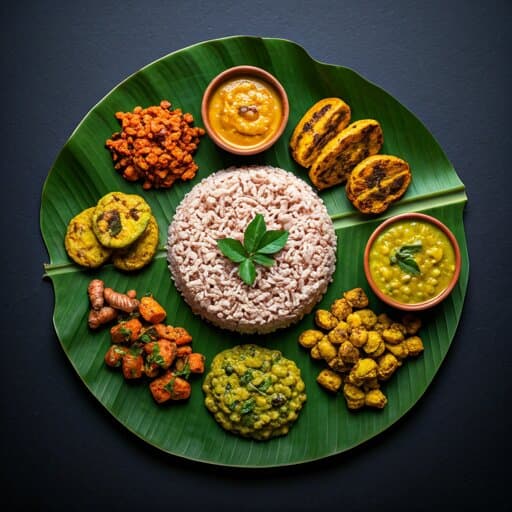
Building a Balanced Thali: A Practical Nutrition Framework
A practical, visual framework for building a nutritionally balanced everyday Kerala thali, without needing to count calories or ma…

Sugar in Disguise: Hidden Sugars in 'Healthy' Kerala Snacks
Several snacks marketed or perceived as healthy in Kerala actually carry meaningful hidden sugar content. Here's what to watch for…

Micronutrient Gaps Common in South Indian Diets
Even a generally healthy South Indian diet can have specific, common micronutrient gaps. Here's what research points to, and pract…