
The Science of Synergistic Nutrition: Why Whole Foods Win
Why Combine Ganoderma and Spirulina Specifically?
Ganoderma and Spirulina come from entirely different biological categories — a woody fungus and a cyanobacterium — but they're increasingly used together in wellness routines across Kerala and other parts of India. This article looks specifically at why that particular combination has become popular, rather than the general whole-food-vs-isolate question, which we cover in more depth in our Science of Whole-Food Nutrition article.
Different Roles, Complementary Timing
Ganoderma Lucidum (Reishi) contains a complex profile of bioactive compounds, including triterpenoids and polysaccharides (beta-glucans), studied for their traditional adaptogenic and immune-modulating associations. Its traditional use pattern favours consistent, often evening, use as part of a longer-term wellness practice.
Spirulina, by contrast, is valued primarily for its nutrient density — particularly protein, iron, and B-vitamins — and its distinctive blue pigment-protein compound, phycocyanin, which has documented antioxidant properties. It's typically used in the morning, mixed into food or a drink, as a nutritional addition rather than a longer-term adaptive practice.
A Practical Combination Approach
Rather than combining them in a single preparation (which isn't necessary — they don't need to be consumed together to be effective), many people use them at different points in the day, aligned with their different traditional roles:
- Morning: Spirulina mixed into a smoothie, buttermilk, or juice, as a nutrient-dense start to the day
- Evening: Ganoderma as a tea or extract, as part of a wind-down routine
This approach respects that each ingredient is understood to work on a different timescale and for a different purpose, rather than trying to force them into a single "power combo" preparation.
What the "Whole Extract" Approach Means for Each
For Ganoderma, "whole extract" or "dual-extract" processing (using both water and alcohol extraction) is generally preferred over isolating a single compound like a specific triterpene, since it captures a broader range of the mushroom's naturally co-occurring bioactive compounds.
For Spirulina, minimal processing — simply drying the algae at low temperatures and grinding to powder — preserves phycocyanin and other heat-sensitive compounds better than more aggressive extraction or isolation processes would.
Being Realistic About "Synergy" Claims
It's worth being cautious about strong claims that combining Ganoderma and Spirulina produces a specific quantified "synergistic boost." While it's reasonable that using complementary wellness practices together can support overall wellbeing more than either alone, be skeptical of sources citing precise percentage improvements for herb combinations — that level of specificity generally isn't something current nutrition research on whole-food combinations can support, and often signals marketing language rather than a genuine study finding.
Frequently Asked Questions
Do I need to take Ganoderma and Spirulina together in the same drink?
No — there's no requirement to combine them in a single preparation. Many people take them separately, at different times of day, aligned with each ingredient's traditional use pattern.
Is one more important than the other?
They serve different purposes, so "more important" depends on your goal. If you're primarily looking for nutrient density, Spirulina is the more direct choice. If you're looking for adaptogenic, stress-related support, Ganoderma is more aligned with that goal.
Can I take both if I'm already taking other supplements?
Generally, healthy adults can combine both with most common supplements, but it's worth reviewing your full supplement and medication list with a doctor, particularly if you're on blood thinners, immunosuppressants, or medication for a chronic condition.
Medical Disclaimer: This article is for educational purposes only and is not medical advice. Consult a qualified healthcare professional before starting any new supplement regimen.
More in the Library
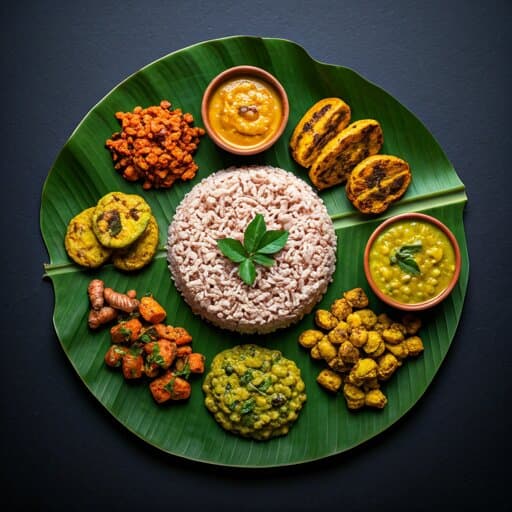
Building a Balanced Thali: A Practical Nutrition Framework
A practical, visual framework for building a nutritionally balanced everyday Kerala thali, without needing to count calories or ma…

Sugar in Disguise: Hidden Sugars in 'Healthy' Kerala Snacks
Several snacks marketed or perceived as healthy in Kerala actually carry meaningful hidden sugar content. Here's what to watch for…

Micronutrient Gaps Common in South Indian Diets
Even a generally healthy South Indian diet can have specific, common micronutrient gaps. Here's what research points to, and pract…