
How Spirulina Is Farmed: From Pond to Powder
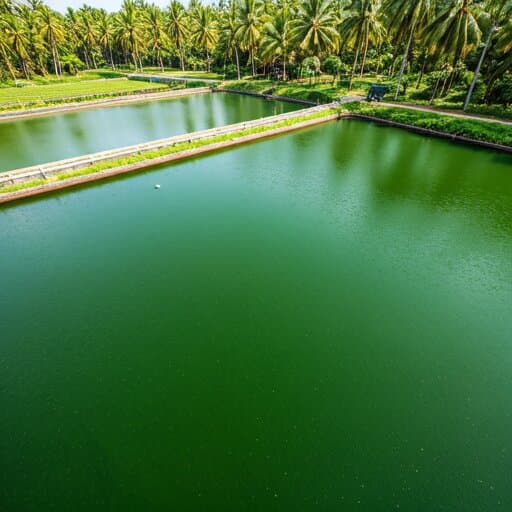
The spirulina powder in a jar goes through a fairly involved process before it reaches that form — one that's genuinely useful for buyers to understand, since each stage affects final quality.
Cultivation
Spirulina is grown in large, shallow, alkaline water ponds under carefully managed conditions — controlled pH, consistent warmth, adequate but not excessive sunlight, and regular monitoring for contamination by other organisms. Commercial-scale cultivation typically uses either open raceway ponds or, in more controlled operations, closed photobioreactor systems that further reduce contamination risk.
Harvesting
Once the culture reaches sufficient density, spirulina is harvested by filtering the water through fine mesh screens, separating the algae from the surrounding water.
Drying
This is one of the most quality-critical steps. Spirulina can be dried using several methods — spray-drying (fast, high-heat), drum-drying, or lower-temperature methods. Lower-temperature drying generally preserves more of the heat-sensitive phycocyanin pigment and other compounds, which is part of why some producers specifically advertise low-temperature or "raw" processing.
Final Processing
Dried spirulina is milled into powder, tested (in reputable operations) for contamination and heavy metals, and packaged. This testing step is one of the more meaningful quality differentiators between producers, given the contamination risks discussed elsewhere in relation to blue-green algae generally.
Frequently Asked Questions
Does drying method really make a noticeable difference?
Yes — lower-temperature drying generally retains more of spirulina's heat-sensitive compounds, which can be reflected in a more vivid colour and, some sources suggest, better nutrient retention.
How can I tell how spirulina was processed?
Reputable producers often disclose drying method and testing practices on their packaging or website; if this information isn't available, it's reasonable to ask directly or consider a more transparent brand.
Is fresh, wet spirulina available, or is it always sold dried?
Fresh spirulina exists but has a very short shelf life and is rarely sold commercially outside of cultivation facilities; dried powder is by far the standard consumer format.
Related Reading
- our Spirulina guide
- The Phycocyanin Pigment: What Makes Spirulina Blue-Green
- Spirulina and Allergies: What to Watch For
Medical Disclaimer: This article is for general educational purposes and is not medical advice. Consult a qualified healthcare professional before making changes to your diet, supplement routine, or lifestyle.
More in the Library
Spirulina and Allergies: What to Watch For
Spirulina is generally well tolerated, but genuine allergic reactions and sensitivities do occur. Here's what to watch for and who…
The Phycocyanin Pigment: What Makes Spirulina Blue-Green
Phycocyanin is the pigment behind spirulina's blue-green colour, and one of its most researched compounds. Here's what it actually…

Blue-Green Algae Confusion: Spirulina vs. Chlorella vs. Toxic Algae
Spirulina and chlorella are often confused, and both are sometimes mixed up with genuinely toxic blue-green algae. Here's how to t…