
Backwater Living: How Kerala's Geography Shapes Its Wellness Culture

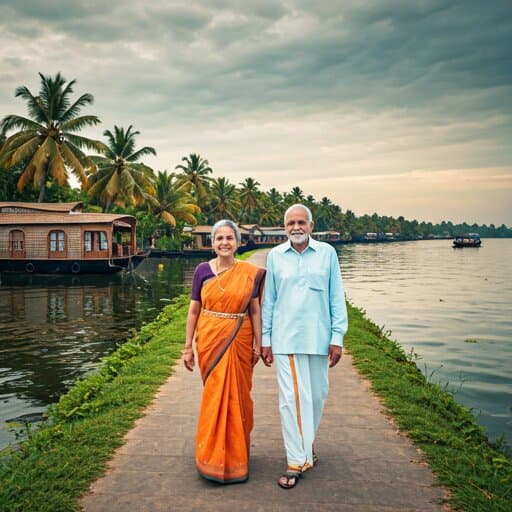
Kerala's distinctive geography — its network of backwaters, dense coconut palm coverage, and pronounced monsoon seasonality — isn't incidental to its wellness culture. It has genuinely shaped the traditional diet and lifestyle patterns still practiced today.
Coconut's Central Role
Kerala's abundant coconut cultivation, closely tied to its backwater and coastal geography, explains coconut's ubiquity in the traditional diet — coconut oil, coconut milk, and grated coconut all feature prominently, reflecting what was locally and sustainably available rather than an arbitrary culinary preference.
Fish and Backwater Agriculture
The backwater ecosystem has historically supported both fishing and rice cultivation in the same low-lying regions, shaping a traditional diet that combines fish-based protein with rice as a dietary staple — a pattern distinct from the more legume-heavy diets common in some other Indian regions.
Monsoon-Adapted Living
Kerala's pronounced monsoon season has shaped traditional practices around seasonal eating, warming spices, and indoor wellness routines specifically adapted to the extended rainy period, reflected in the state's traditional "monsoon wellness" dietary emphasis on immunity-supportive, warming foods.
A Geography-Aware Approach to Wellness
Understanding why certain foods and practices became traditional in Kerala — because of what the land and water genuinely provided — offers a more grounded way to engage with the tradition than treating it as an arbitrary set of rules, and can help explain why some imported "superfood" trends feel less naturally suited to the region than foods already locally available.
Frequently Asked Questions
Does Kerala's traditional diet still make sense in an urban setting?
The underlying principles — local, seasonal, whole-food eating — remain relevant even where specific ingredients like fresh backwater fish are less accessible in a city context.
Why is coconut oil so central to Kerala cooking specifically, compared to other Indian regions?
Largely because of Kerala's geography and climate, which favour extensive coconut cultivation in ways less true of drier, inland regions of India.
Is Kerala's traditional diet particularly healthy compared to other regional Indian diets?
It has genuine strengths (fish protein, coconut's specific fat profile, diverse vegetables) and some areas of caution (historically high refined-carbohydrate intake in some modern contexts) — it's best evaluated on its specific components rather than as uniformly "healthier" or "less healthy" than other regional diets.
Related Reading
- 10 Antioxidant-Rich Foods for the Kerala Kitchen
- Kerala's Traditional Oil Massage (Abhyanga): Benefits and Practice
Medical Disclaimer: This article is for general educational purposes and is not medical advice. Consult a qualified healthcare professional before making changes to your diet, supplement routine, or lifestyle.
More in the Library
The Malayali Joint Family and Mental Wellbeing
Kerala's traditional joint family structure has genuine, researched links to mental wellbeing — alongside real modern tensions wor…

Coconut in Kerala Cuisine: Superfood or Overhyped?
Coconut is central to Kerala cooking and often marketed as a superfood elsewhere. Here's a genuinely balanced look at what the evi…
Kerala's Spice Garden Heritage and Everyday Wellness
Kerala's historic spice trade left a lasting culinary legacy. Here's how that heritage connects to genuinely useful everyday welln…