Spirulina vs. Ganoderma: Understanding the Difference
The Nutrient Density of Spirulina
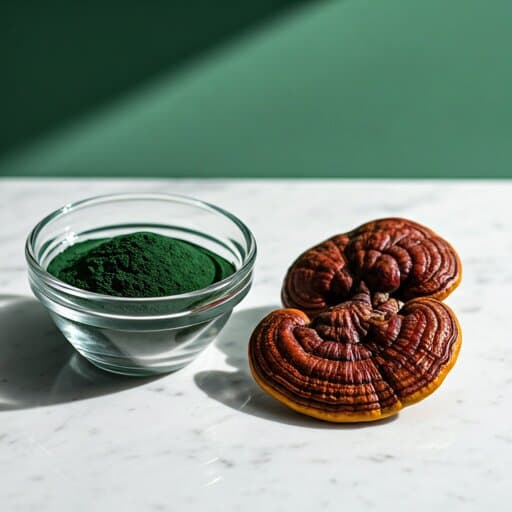
Spirulina is often hailed as the "King of Superfoods" for a good reason. This blue-green algae is one of the most nutrient-dense foods on the planet, containing a high concentration of plant-based protein, iron, and B-vitamins.
60% Protein
Complete protein source containing all essential amino acids — unusual for a plant-based food, most of which lack one or more essential amino acids on their own.
Iron & B12
Essential for energy production and fighting fatigue naturally, which is particularly relevant given how common iron-deficiency anaemia is across India.
Research suggests that regular spirulina intake can support muscle recovery, improve lipid profiles, and provide a boost to antioxidant status through its distinctive blue pigment-protein compound, phycocyanin.
The Adaptogenic Strength of Ganoderma
While Spirulina focuses on nutrition, Ganoderma Lucidum (Reishi) is often described as the master of balance. Known in traditional medicine as the "Mushroom of Immortality," its primary role is as an adaptogen — a substance believed to help the body manage stress more effectively rather than directly supplying nutrients.
Stress & Sleep Support
- May support healthy cortisol regulation
- Traditionally used to promote deeper, more restorative sleep
- Associated in traditional use with liver support
- Studied for its role in modulating immune system response
Where They Actually Differ
It helps to think of these as solving different problems rather than competing for the same role:
| Spirulina | Ganoderma | |
|---|---|---|
| Category | Nutrient-dense food (algae) | Adaptogenic mushroom |
| Primary role | Supplies protein, iron, B-vitamins | Supports stress response, sleep |
| Best taken | Morning, with food | Evening, consistently |
| Taste | Mild, "oceanic" | Bitter, usually taken as extract/capsule |
| Typical form | Powder, mixed into food/drink | Powder, capsule, or decoction |
Taking Them Together: The Synergy
Many wellness enthusiasts find that Spirulina and Ganoderma complement each other rather than compete. Spirulina provides raw nutritional building blocks the body needs to function, while Ganoderma is traditionally used to help keep the body's stress-response systems balanced enough to make good use of those nutrients.
Think of Spirulina as quality fuel for the engine, and Ganoderma as the maintenance system that keeps the engine running smoothly under pressure. Neither replaces a balanced diet or medical care — they're complementary additions, not substitutes.
Choose Spirulina If:
- You need a nutrient boost, particularly protein or iron, in a plant-based diet
- You are training or physically active and want extra micronutrient support
- You're looking for something to add to breakfast or a morning smoothie
Choose Ganoderma If:
- You are dealing with ongoing everyday stress
- You struggle with sleep quality or an inconsistent wind-down routine
- You're interested in a longer-term adaptogen practice rather than an immediate energy boost
Or Consider Both
Some people use Spirulina in the morning as part of breakfast, and Ganoderma in the evening as part of a wind-down routine — using each for what it's traditionally best suited to, rather than choosing one over the other.
A Note on Sourcing Both
Because Spirulina is grown in water and Ganoderma is cultivated on substrate, both are vulnerable to different contamination risks — heavy metals and microcystins for Spirulina, and mould or improper drying for Ganoderma. Whichever you choose, prioritise suppliers who are transparent about testing and sourcing over the cheapest option available.
Frequently Asked Questions
Can I take Spirulina and Ganoderma on the same day?
Yes — many people do, typically Spirulina in the morning and Ganoderma in the evening, aligned with what each is traditionally used to support. There's no known interaction between them that would make combined use unsafe for most healthy adults.
Which one is better for weight management?
Neither is a weight-loss supplement. Spirulina's protein content may support satiety as part of a balanced diet, while Ganoderma's traditional stress-support role may indirectly help with stress-related eating patterns — but neither should be relied on as a primary weight-management strategy.
Is one more suitable for beginners?
Spirulina is generally the easier starting point, since it's added directly to food or drink and its effects on nutrient intake are more immediately tangible. Ganoderma's adaptogenic effects tend to build gradually over weeks, which can make it feel less immediately noticeable to someone new to it.
The information on this page is for educational purposes only and is not intended as medical advice. Always consult with a healthcare professional before starting any new supplement regimen, especially if you are pregnant, nursing, or have a pre-existing medical condition.
Related Reading
- our Ganoderma guide
- Combining Ganoderma With Your Daily Coffee or Tea
- The Cordyceps and Ganoderma Difference: Two Adaptogens Compared
Medical Disclaimer: This article is for general educational purposes and is not medical advice. Consult a qualified healthcare professional before making changes to your diet, supplement routine, or lifestyle.
More in the Library

Ganoderma During Cold and Flu Season: What's Reasonable to Expect
Many people turn to Ganoderma during cold and flu season for immune support. Here's a grounded look at what's reasonable to expect…
Ganoderma for Athletes: Recovery and Endurance Claims Examined
Athletes increasingly use Ganoderma alongside training. Here's an honest look at what's traditionally claimed versus what current …
The Cordyceps and Ganoderma Difference: Two Adaptogens Compared
Cordyceps and Ganoderma are both mushroom-derived adaptogens, but they're associated with quite different traditional uses. Here's…