
Red vs. Black vs. Yellow Reishi: Understanding Ganoderma Species
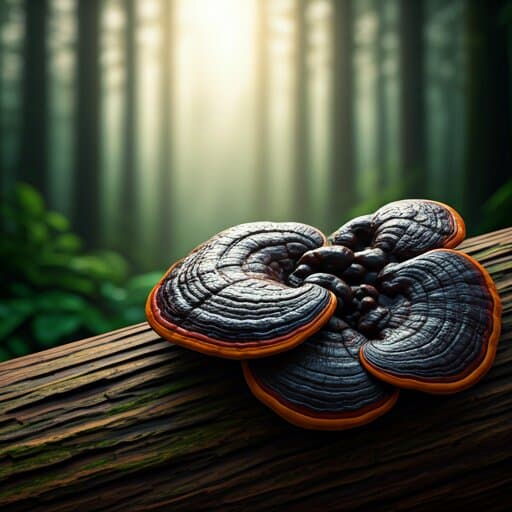
Traditional Chinese medicine has long recognised several colour varieties of Ganoderma, sometimes called the "six reishi" — though in practice, red, black, and yellow are the varieties most commonly discussed today, and red reishi (Ganoderma lucidum) is by far the most studied and commercially available.
Red Reishi (Ganoderma Lucidum)
This is the variety behind the overwhelming majority of modern research and commercial products, traditionally associated with general vitality and immune support, and the variety referenced whenever "Ganoderma" is used without further qualification.
Black Reishi (Ganoderma Sinense)
Traditionally associated in some texts with kidney-related wellness support, black reishi is considerably less studied in modern research than red reishi, and claims about it should be treated as more speculative and traditionally sourced rather than research-backed.
Yellow Reishi (Ganoderma Curtisii)
The least commercially common of the three, yellow reishi appears in some traditional formulations but has very limited independent modern research, making specific claims about it harder to verify.
Why This Matters for Buyers
Products labelled simply "Reishi" or "Ganoderma" almost always refer to the red variety unless otherwise specified — which is reassuring, since it's the best-researched option. If a product specifically claims to use black or yellow reishi for a targeted benefit, it's worth treating those specific claims with more caution, given the thinner research base.
Frequently Asked Questions
Is one colour variety "better" than the others?
Red reishi has by far the strongest research base, which makes it the more reliably understood option — not necessarily "better" in an absolute sense, but better documented.
Can I combine different Ganoderma species?
Traditional formulations sometimes do, but there's limited independent research on combined-species products specifically, so it's reasonable to prioritise well-standardised single-species products, especially red reishi, if you're newer to Ganoderma.
Are all six traditionally recognised reishi varieties still used today?
No — several of the traditionally listed varieties are rarely available commercially today, and most modern products focus on red reishi specifically.
Related Reading
- our Ganoderma guide
- The Cordyceps and Ganoderma Difference: Two Adaptogens Compared
- Ganoderma and Blood Sugar: What Early Research Suggests
Medical Disclaimer: This article is for general educational purposes and is not medical advice. Consult a qualified healthcare professional before making changes to your diet, supplement routine, or lifestyle.
More in the Library
Ganoderma for Athletes: Recovery and Endurance Claims Examined
Athletes increasingly use Ganoderma alongside training. Here's an honest look at what's traditionally claimed versus what current …
The Cordyceps and Ganoderma Difference: Two Adaptogens Compared
Cordyceps and Ganoderma are both mushroom-derived adaptogens, but they're associated with quite different traditional uses. Here's…

Ganoderma and Blood Sugar: What Early Research Suggests
What early research says about Ganoderma and blood sugar regulation, and why caution is warranted for anyone on diabetes medicatio…