The History of Reishi Mushroom: 2,000 Years of Wellness Wisdom
Key Milestones
- 200 BCE — Recorded in Shen Nong's Classic of Herbal Medicine, one of the earliest Chinese pharmacopoeias.
- Ming Dynasty — Reserved almost exclusively for emperors and royalty, too rare and valuable for common use.
- 1970s — Breakthrough in successful artificial cultivation, making Reishi accessible beyond royal courts for the first time in its history.
- Present Day — Kerala emerges as a hub for organic Ganoderma cultivation, combining the state's tropical climate with growing wellness-education infrastructure.
Fast Fact
Reishi is often called Lingzhi in China, which translates to "Divine Mushroom" or "Herb of Spiritual Potency."
The Legendary "Mushroom of Immortality"
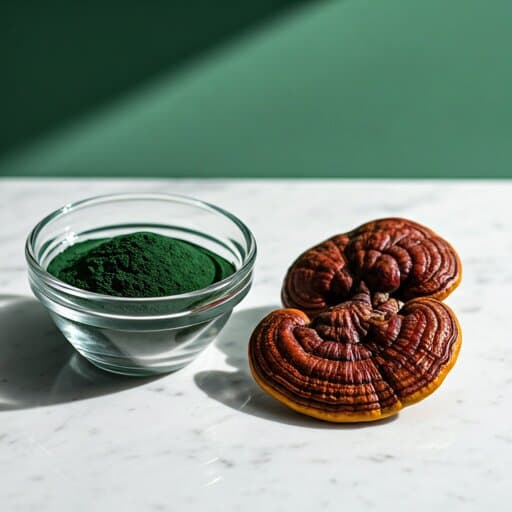
For over two millennia, the Reishi mushroom (Ganoderma lucidum) has sat atop the hierarchy of traditional Eastern botanicals. Once found only in remote mountain regions growing on old plum trees, it was so rare that discovering one in the wild was considered a favourable omen. Ancient texts refer to it as the "Ten-Thousand-Year Mushroom," a nod to its perceived ability to grant longevity and spiritual clarity.
The Cultural Significance
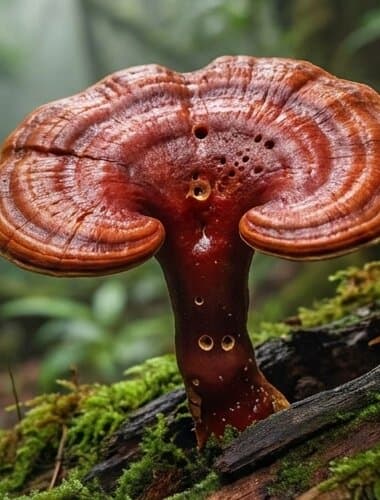
In traditional art, Reishi is often depicted as a talisman of good fortune. It appears in Buddhist paintings and on royal robes throughout Chinese dynastic history, symbolising a bridge between the physical and spiritual realms. The mushroom's distinctive shiny, lacquered cap — which gives it the name "lucidum," meaning "shining" in Latin — made it visually striking enough to become a recurring motif in decorative art for centuries.
Traditional Use vs. Modern Extraction
How we consume this wellness botanical has evolved significantly. While the ancients relied on slow-brewed decoctions, modern science has unlocked more standardised extraction methods.
Ancient Decoction
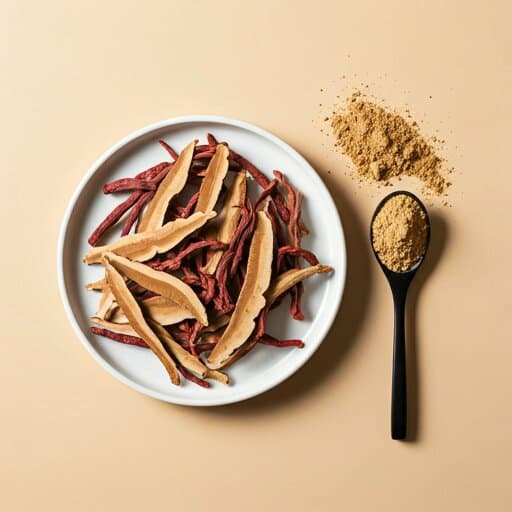
- Dried slices boiled for two or more hours
- Extracts primarily water-soluble components (polysaccharides)
- An acquired, intensely bitter taste profile
- Required significant preparation time and equipment
Modern Extraction
- Dual-extraction methods capture both water- and alcohol-soluble compounds
- Concentrated triterpenes and beta-glucans in a standardised, testable form
- Available as easy-to-use powders and capsules
- Allows for more consistent dosing than home decoction
The Kerala Renaissance — and Beyond
Kerala's humid climate and rich biodiversity have made it an increasingly significant modern home for Ganoderma cultivation, though it's far from alone — cultivation and interest have also grown in parts of Karnataka, Maharashtra, and the Northeast, reflecting a broader pan-India curiosity about functional mushrooms alongside more established Ayurvedic herbs. In Kerala specifically, local farmers and wellness practitioners are bridging Eastern herbal philosophy with Ayurvedic principles, identifying Reishi as functioning similarly to a "Rasayana" — the Ayurvedic concept of a rejuvenating substance that supports the body's overall resilience rather than targeting a single symptom.
This cross-tradition framing has helped Ganoderma find a natural place within Kerala's already-strong wellness and Ayurveda culture, rather than being introduced as a wholly foreign concept.
From China to Kerala: A Parallel Tradition
It's worth noting that Ayurveda, independently of Traditional Chinese Medicine, has its own multi-thousand-year history of using adaptogenic herbs — Ashwagandha and Brahmi are perhaps the most well-known examples in Kerala households. Ganoderma's introduction into the modern Kerala wellness market has often been framed alongside these familiar Ayurvedic adaptogens, since the underlying concept (a substance that helps the body build resilience over time) is already culturally familiar, even if the specific mushroom is new to most households.
How This History Informs Modern Use
Understanding Ganoderma's long history matters practically, not just academically — it explains why traditional use emphasises consistency over quick results (this was never framed as a fast-acting remedy), why quality and sourcing have always mattered (imperial courts went to considerable lengths to verify authenticity), and why the "dual-extraction" methods used by reputable modern brands are trying to replicate, in a standardised way, what centuries of decoction attempted to achieve through slow preparation.
Frequently Asked Questions
Is the Ganoderma sold today the same as what was used historically?
Botanically, yes — modern commercial Ganoderma is the same species used historically, though it's now grown under controlled cultivation rather than foraged from the wild, and processed using standardised extraction methods rather than home decoction.
Why was Reishi restricted to royalty historically?
Primarily due to scarcity. Wild Ganoderma lucidum was genuinely rare, and its unusual appearance and reported effects led to it being treated as a precious commodity worthy of the imperial court, long before large-scale cultivation made it broadly accessible.
Does Kerala have its own historical tradition involving Ganoderma specifically?
Not directly — Ganoderma's use in Kerala is a more recent development, layered onto the region's much older and independent Ayurvedic tradition. The two traditions share conceptual similarities (adaptogenic, rejuvenating substances) even though they developed separately.
Related Reading
- our Ganoderma guide
- Combining Ganoderma With Your Daily Coffee or Tea
- The Cordyceps and Ganoderma Difference: Two Adaptogens Compared
Medical Disclaimer: This article is for general educational purposes and is not medical advice. Consult a qualified healthcare professional before making changes to your diet, supplement routine, or lifestyle.
More in the Library
Ganoderma During Cold and Flu Season: What's Reasonable to Expect
Many people turn to Ganoderma during cold and flu season for immune support. Here's a grounded look at what's reasonable to expect…
Ganoderma for Athletes: Recovery and Endurance Claims Examined
Athletes increasingly use Ganoderma alongside training. Here's an honest look at what's traditionally claimed versus what current …
The Cordyceps and Ganoderma Difference: Two Adaptogens Compared
Cordyceps and Ganoderma are both mushroom-derived adaptogens, but they're associated with quite different traditional uses. Here's…